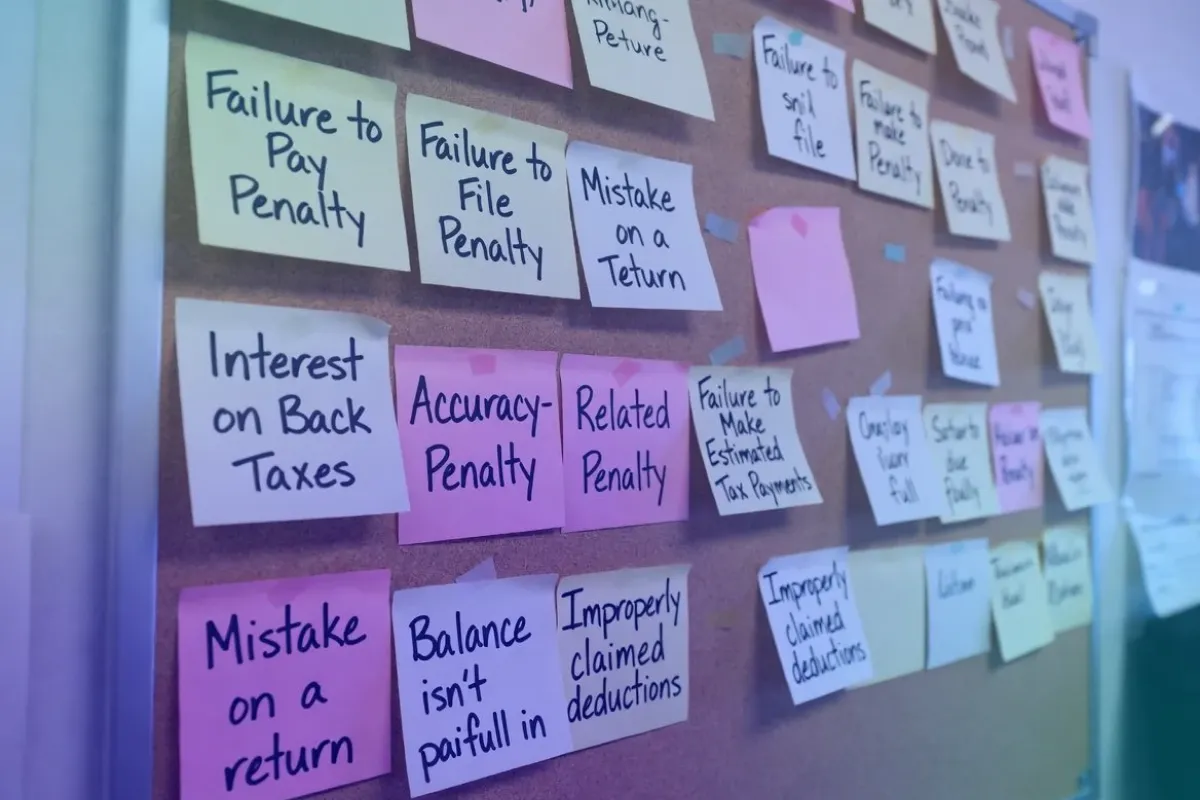
IRS Penalties Explained Without the Jargon
IRS penalties have a way of sounding worse than they are, mostly because they’re written in language that feels designed to raise your blood pressure. If you’ve received a CP14, CP504, or another IRS notice about back taxes, you already know how intimidating those letters can feel.
Take a breath.
You do not need a law degree to understand IRS penalties. And you definitely do not need to panic.
What IRS Penalties Really Are
IRS penalties are financial add-ons. They are triggered by missed deadlines, missing paperwork, or unpaid tax balances.
They are administrative. Not personal.
The IRS system is largely automated. When certain deadlines pass or balances remain unpaid, penalties are applied by formula. When time passes without action, they continue to grow.
That is the core of it. No drama. Just math and timing.
Understanding that helps you move from fear to strategy.
The Most Common IRS Penalties, Explained
If you are dealing with back taxes, these are the penalties you are most likely to see.
1. Failure to File Penalty
This applies when you do not file your tax return by the deadline.
It is calculated as a percentage of the unpaid tax for each month the return is late, up to a maximum cap. This is one of the fastest-growing penalties the IRS charges.
In practical terms, filing late is far better than not filing at all. Even if you cannot pay right now, submitting the return can significantly reduce how fast your balance grows.
Action step: If you have unfiled years, file them as soon as possible. That alone can slow the damage.
2. Failure to Pay Penalty
This penalty applies when you file your return but do not pay the full amount owed.
The monthly rate is lower than the failure to file penalty, but it still adds up. Many people avoid filing because they cannot afford to pay. Unfortunately, that usually makes the total balance worse.
The IRS prioritizes getting your return on file. Payment solutions can often be arranged later.
Action step: File first. Then explore resolution options for the balance.
3. Interest on Back Taxes
Interest accrues on unpaid taxes and on penalties that have already been added.
While technically not labeled as a penalty, interest behaves like one. It compounds. This is why your IRS balance can grow even when you have not received a new notice.
Time increases tax debt. That is why early action matters.
4. Accuracy-Related Penalty
This penalty is assessed when the IRS believes there was a significant error on your return, such as underreported income or incorrect deductions.
This does not automatically mean fraud. Many accuracy penalties come from misunderstandings, missing documents, or incorrect reporting.
The IRS focuses on numbers, not assumptions about your character.
5. Failure to Make Estimated Tax Payments
If you are self-employed, a contractor, or a freelancer, you may be required to make quarterly estimated payments.
If you do not, the IRS may assess a penalty even if you eventually pay the full amount at filing time.
This catches many taxpayers off guard because it operates differently than traditional W-2 withholding.
Why IRS Penalties Feel So Intimidating
IRS notices are written for enforcement, not comfort. The tone is formal and rigid. That tone often makes penalties feel like judgments.
They are not.
They are formulas applied to dates and balances.
When you understand that, you can respond logically instead of emotionally. Panic leads to avoidance. Avoidance leads to higher balances and potential IRS collections.
Clarity creates options.
At BackTaxAI, our mission is to replace confusion with control. We decode IRS notices in plain English, show you what the penalties mean, and outline realistic next steps based on actual IRS guidelines.
Can IRS Penalties Be Reduced or Removed?
Often, yes.
The IRS offers penalty relief programs, including:
First-time penalty abatement
Reasonable cause relief
Administrative corrections
These are written into IRS procedures. They are not special favors.
The challenge is knowing whether you qualify and submitting the request correctly. Many taxpayers either do not realize they qualify or ask in a way that does not meet IRS standards.
This is where technology is changing back tax resolution. Modern AI-driven platforms can now analyze your situation, identify potential penalty relief paths, and simulate different resolution strategies before you submit anything. That kind of visibility helps you make smarter decisions earlier, before penalties grow larger.
What Happens If You Ignore IRS Penalties
Penalties alone do not trigger wage garnishments or bank levies.
Unresolved back taxes do.
Penalties increase your balance. A larger balance increases the likelihood of IRS collections actions. Collections escalate when there is no response.
It is a sequence.
Understanding your penalties early gives you leverage. Waiting gives the IRS system momentum.
A Smarter Next Step
If IRS penalties are part of your back tax situation, it simply means something went unaddressed. That can be fixed.
Start by confirming:
Which penalties have been applied
How much interest has accrued
Whether you qualify for penalty relief
What resolution path makes the most financial sense
You do not have to figure that out alone.
If you are ready to take control, start with a FREE CONSULTATION to learn more about what your IRS penalties notices mean and what actions can be taken to reduce or remove them. CLICK HERE
Do not ignore those IRS letters. They do not disappear.